Hello, I am Dr. Nk Park, a board-certified plastic surgeon at Noonopi Plastic Surgery, Seoul, Korea. The under-eye area is often the first place to show signs of aging. Hollowness or depressions in this area not only make you look constantly exhausted but also add years to your actual age. To address this, many patients consider an under eye fat transfer, which is one of the most common techniques in facial fat graft procedures.
However, because the under-eye area is incredibly delicate, you might have natural concerns: "How bad will the swelling be?" or "What if the results look lumpy?"
Today, I will walk you through everything you need to know about this procedure, from the recovery timeline to our exclusive know-how for preventing side effects.
Who is the Ideal Candidate for an Under Eye Fat Transfer?
An under eye fat transfer provides benefits that go far beyond simply filling space. It is highly effective in the following cases:
1. Deep Tear Troughs and Dark Circles
When deep tear troughs create dark shadows, making your overall impression look gloomy.
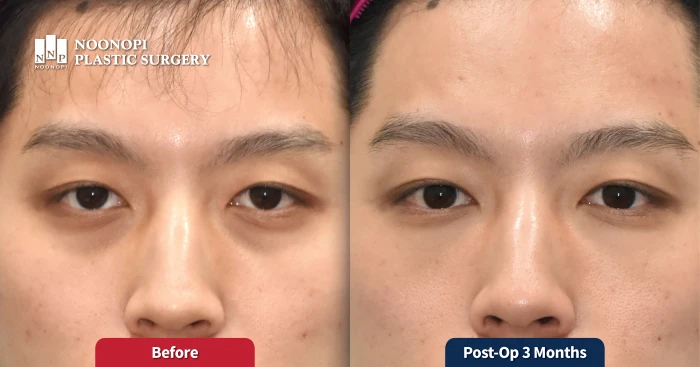
2. Volume Reinforcement After Fat Repositioning
When an under-eye fat repositioning surgery alone is not quite enough, and you want to perfectly restore the missing 2% of volume.
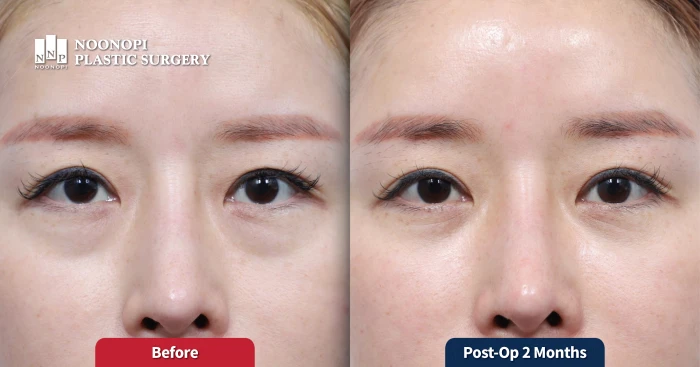
3. Thin Skin and Translucency
When the skin around the eyes is so thin that underlying muscles or blood vessels show through as a bluish tint. This is a very common cause of dark circles. At Noonopi Clinic, we treat this specific type of dark circle by combining laser treatments with a precision fat graft.
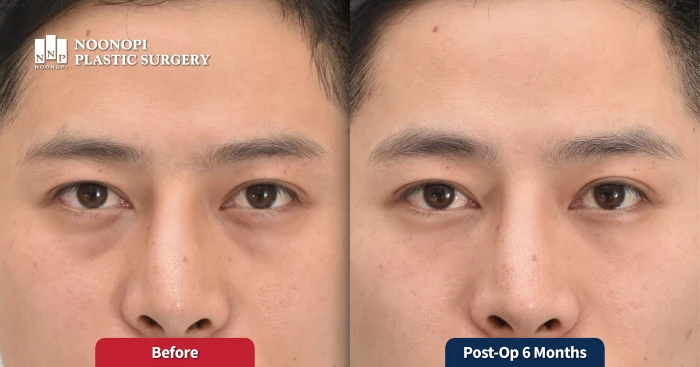
4. Over-Resection of Fat from Past Surgeries
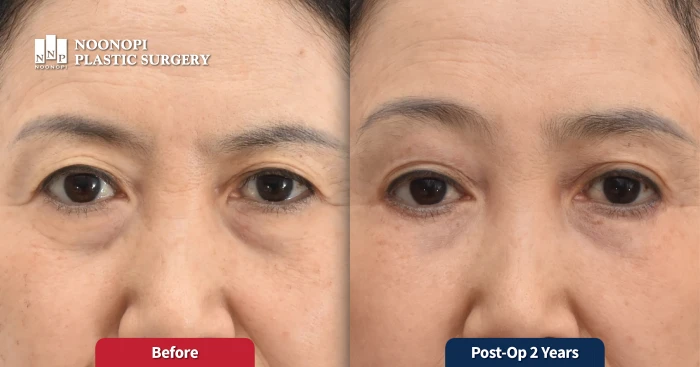
When severe hollow eyes are caused by an incorrect lower blepharoplasty in the past. The concept of "repositioning" fat is relatively modern. The case below shows a patient who had a lower blepharoplasty over 20 years ago, resulting in excessive fat removal—a practice that contradicts today's standard of utilizing natural autologous tissue. We performed a revision lower blepharoplasty alongside a fat transfer to improve both the sinking and the under-eye wrinkles.
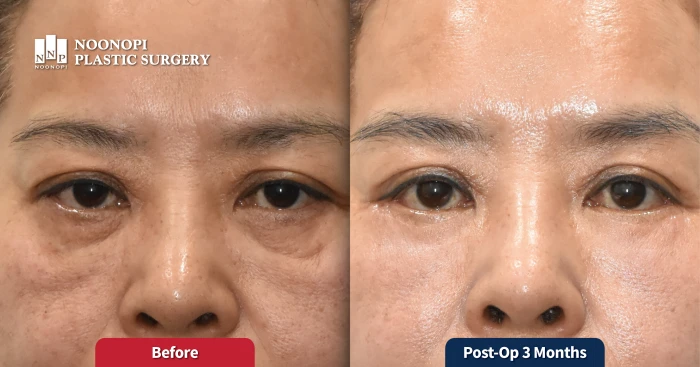
How is Recovery? Swelling and Return to Daily Life
The recovery timeline is often the most common question patients have during consultations.
Day 0 to Day 3
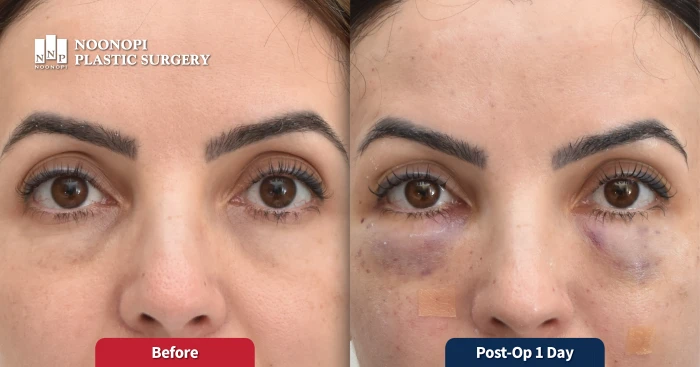
Swelling typically peaks on the 2nd or 3rd day, rather than immediately after the surgery. Noonopi Clinic’s micro-cannula technique minimizes tissue damage to reduce bruising and swelling. However, as seen in the case above, if the surgery is combined with Rejuran, skin boosters, and laser treatments, the initial swelling and bruising will naturally be more pronounced.
Day 5 to Day 7
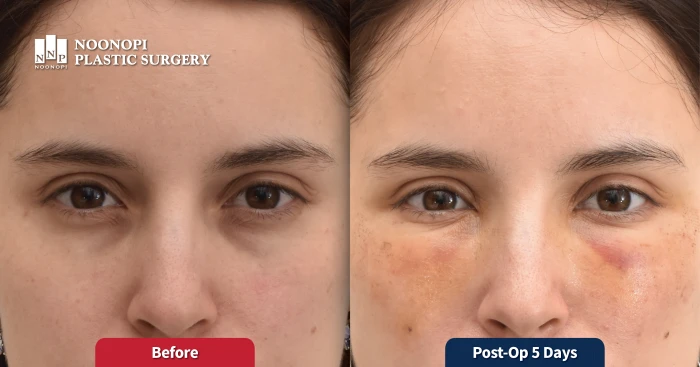
By day 5, the major swelling subsides, allowing you to comfortably return to your normal social life. Because there are no external skin incisions, any mild remaining bruising can easily be covered with BB cream or makeup.
2 Weeks to 1 Month
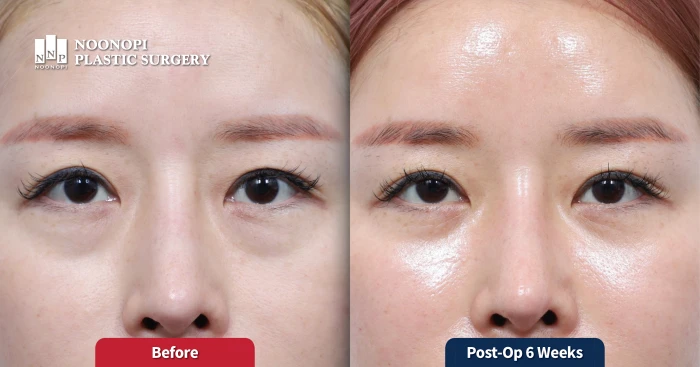
This is the "engraftment phase" where the transplanted fat settles into its permanent position. Approximately 20% to 30% of the initial volume will be naturally absorbed by the body, revealing your final, natural contours.
Preventing Side Effects: How to Avoid Lumps and Irregularities after Fat Injection
The skin under the eyes is exceptionally thin. If fat is injected in a single large clump, it can harden into nodules or create a bumpy, irregular surface. This is the most critical side effect to avoid during an under eye fat transfer.
🔍 Noonopi Clinic’s Know-How for Preventing Side Effects:
- Nano-Fat Filtering: We strictly exclude large fat particles. We extract and utilize only specialized, ultra-fine micro-fat tailored for the delicate eye area.
- Multi-Layered Micro-Injection: I never inject a large amount of fat at once. Instead, I carefully stack the fat in microscopic layers to keep the skin surface flawlessly smooth.
- Avoiding Over-Correction: While factoring in the expected survival rate of the fat, I strictly avoid excessive over-correction to prevent the under-eye area from looking unnaturally puffy.
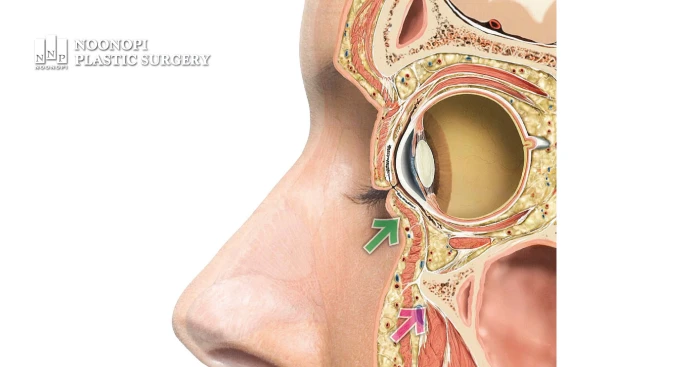
Green arrow: Area where nano fat is injected to promote stem cell like effects on skin
Red arrow: Area where micro fat is injected for volume enhancement
Why a Fat Grafting is the Core Solution for Under Eye Hollows
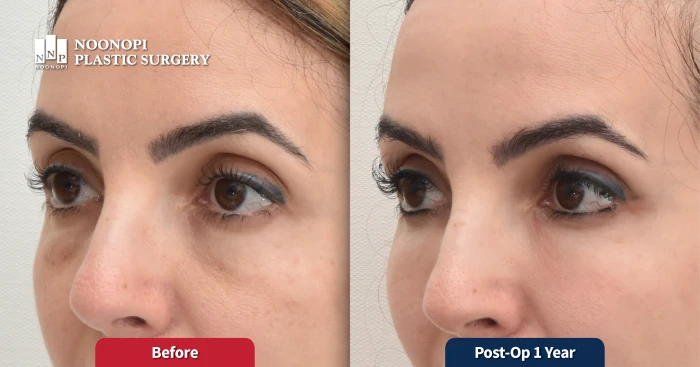
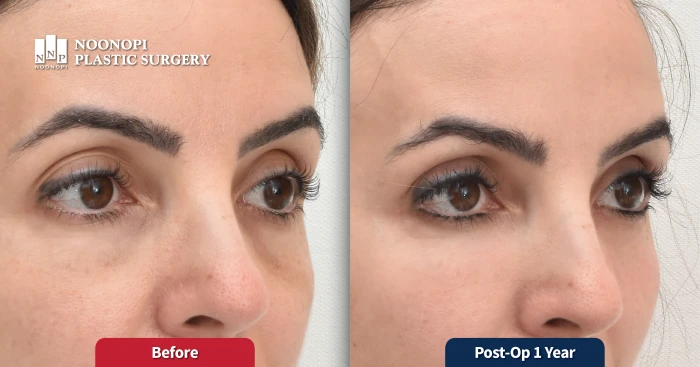
The under-eye area is the central focal point that connects to the mid-face. When under eye hollows are smoothly filled, the volume of the front cheeks is naturally revived, bringing a 3-dimensional, youthful contour to your entire facial line. This is why a successful fat graft requires an artistic perspective that considers the harmony of the entire face, not just the eyes.
Frequently Asked Questions (FAQ)
- Q: Where is the fat harvested from? A: We typically harvest fat from areas where high-quality fat is well-preserved, such as the thighs or the abdomen.
- Q: Why is an under eye fat transfer better than dermal fillers? A: Over time, synthetic fillers can spread or cause the Tyndall effect (a bluish, transparent tint under the skin). In contrast, autologous fat becomes your own living tissue once it engrafts, offering a permanent, natural result with zero foreign body sensation.
- Q: Won't the fat just absorb and disappear over time? A: If the fat harvesting and purification processes are performed correctly using standard protocols, the engrafted fat will maintain its volume and effects for many years.
Conclusion: Safe and Natural Results Promised by Noonopi
An under eye fat transfer is not merely a 'technique of filling'; it is much closer to the 'art of delicate design.' Highly satisfactory results without side effects can only be achieved by a surgeon with a profound anatomical understanding of facial tissues and extensive clinical experience.
Are you worried about post-operative swelling, or perhaps considering a revision surgery due to a past failure? Book a consultation today, and I will provide you with a clear, honest, and expert solution.