

Many patients come to my clinic frustrated that their double chin persists despite weight loss, contouring injections, or non-invasive laser lifting. When deciding to move forward with surgical correction, the two most common options patients compare are Neck Liposuction (Submental Liposuction) and a Deep Neck Lift.
While both procedures aim to sculpt a sharper, cleaner jawline, they target completely different anatomical layers. Understanding these differences is the key to achieving a satisfying result the first time—and avoiding unnecessary revision surgery.
📌 Key Takeaways at a Glance
- Identify the Root Cause: A double chin isn't always caused by surface fat; enlarged submandibular (salivary) glands, loose neck muscles (platysma), and skin laxity often play a major role.
- When Liposuction Works Best: Ideal for patients in their 20s or 30s with strong skin elasticity whose fullness is strictly limited to superficial fat above the muscle.
- When a Neck Lift Is Necessary: If your under-chin fullness worsens when looking down, or if previous submental liposuction failed to define your jawline, a deep layer treatment is the definitive solution.
🎥Video explanation for deep neck lifting
1. The 4 Anatomical Layers Behind a Double Chin
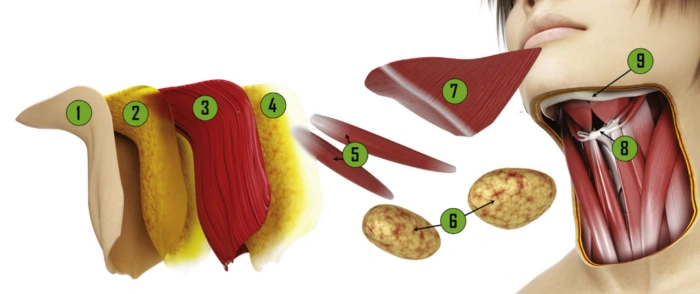
Not all fullness beneath the chin is the same type of fat. From the outside in, the neck is structured into several distinct layers:
① Skin → ② Superficial (Subcutaneous) Fat → ③ Neck Muscle (Platysma)
→ ④ Deep (Subplatysmal) Fat → ⑤ Submandibular (Salivary) Glands, Digastric muscle (anterior belly)
The primary reason patients see disappointing results from standard liposuction is that it leaves deep fat and structural issues beneath the muscle untreated. Removing only the superficial fat layer cannot correct enlarged salivary glands or a sagging platysma muscle.
2. Submental Liposuction vs. Neck Lifting: Key Differences
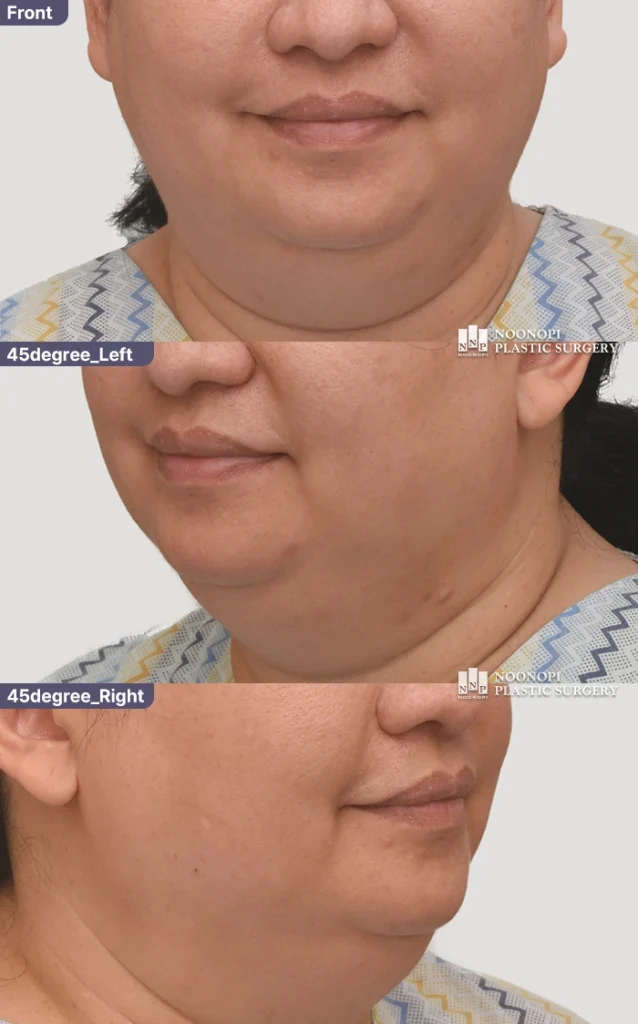
The difference between these two procedures is whether the surgeon access the deeper structures beneath the platysma muscle or not.

| Comparison Factor | Double Chin Liposuction | Deep Neck Lift |
| Treatment Scope | Removes superficial fat above the muscle | Removes deep fat + reduces salivary glands + tightens platysma muscle (platysmaplasty) |
| Incision & Scarring | Tiny 3–4mm access ports under the chin/ears | Hidden submental incision along the natural chin crease for direct visibility |
| Return to Work | 1 to 3 days post-op | 5 to 12 days post-op (easily concealed with high collars or scarves) |
| Surgical Complexity | Relatively straightforward | High (requires advanced anatomical mastery around facial nerves and blood vessels) |
| Ideal Candidates | Good skin elasticity with localized surface fat | Enlarged salivary glands, muscle banding/laxity, or excess sagging skin |
| Average Cost Range | Approx. $800 – $2,300 USD (1M – 3M KRW) | Starting from $4,500+ USD (6M+ KRW, depending on surgical scope) |
3. Which Procedure Should You Choose? (Self-Assessment Checklist)
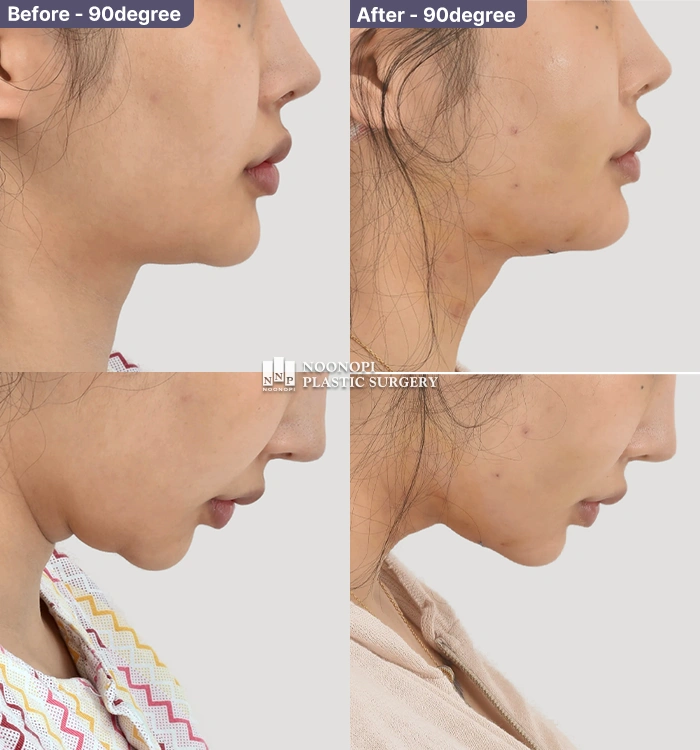
Being young does not automatically mean liposuction is enough, nor does being older mean you must undergo a full facelift. Use this checklist to see which approach aligns with your anatomy:
✔ Double Chin Removal May Be Right for You If:
- You are in your 20s or 30s with firm, elastic skin capable of snapping back smoothly after fat removal.
- Only a mild amount of soft pinchable fat appears when you tilt your head downward.
- Minimizing downtime and returning to daily routines within 2 to 3 days is your top priority.
✔ A Surgical Neck Lift (Platysmaplasty & Gland Reduction) Is Recommended If:
- You have naturally prominent or low-hanging submandibular glands that create a bulky, blunted jawline.
- You have already undergone liposuction elsewhere with minimal improvement and are considering revision surgery.
- Loose neck muscles and skin laxity have blurred the transition between your jaw and neck.
4. Critical Details That Determine a Successful Neck Lift
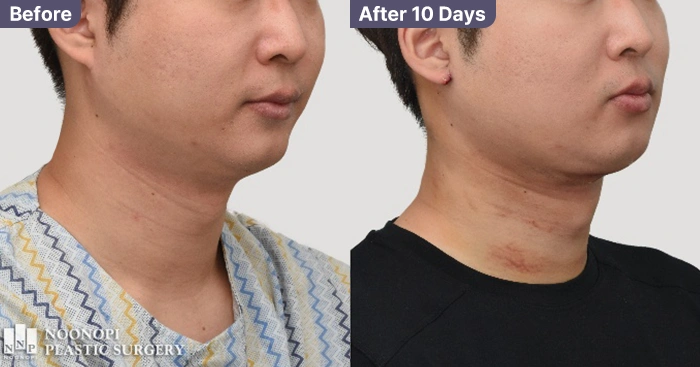
A refined deep neck lift is not about aggressively stripping away as much tissue as possible. True surgical precision lies in how harmoniously the remaining structures are sculpted and secured to fit your bone structure.
- Balanced Reduction of Lateral Salivary Glands: Beyond the central portion visible from the front, the outer (lateral) portion of the submandibular gland must be carefully trimmed under direct vision so it doesn't bulge along your 45-degree profile.
- High-Tension Muscle Fixation (Platysmaplasty): The platysma muscle must be anchored at the exact anatomical vector and tension so your jawline stays crisp even when you look down at your phone.
- Comprehensive Safety Protocols: Because the deep neck houses vital blood vessels and marginal mandibular nerve branches, ensure your clinic is equipped with precision hemostasis tools and an in-house board-certified anesthesiologist.
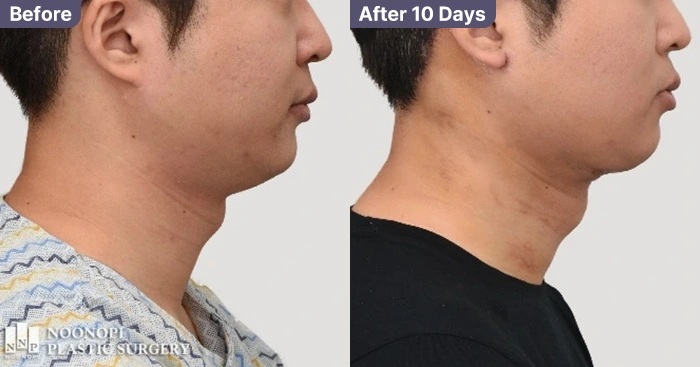
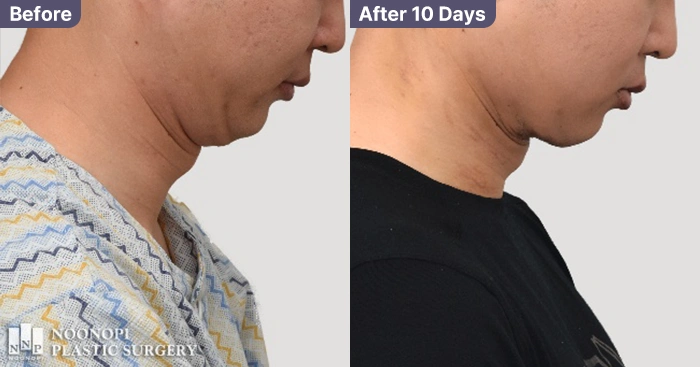
If you aren't sure whether your double-chin is caused by surface fat, deep fat, or enlarged salivary glands, the best first step is an accurate anatomical evaluation. At Noonopi Plastic Surgery, we provide transparent guidance on every option, realistic recovery timelines, and tailored surgical planning.

What is the main difference between double chin liposuction and a surgical neck lift?
Liposuction only removes superficial fat above the muscle, whereas a surgical neck lift addresses deep subplatysmal fat, reduces enlarged salivary glands, and tightens the platysma muscle for comprehensive jawline contouring.
Why didn't my double chin go away after submental liposuction?
When a double chin is caused by enlarged submandibular glands or a loose platysma muscle beneath the superficial fat layer, removing surface fat alone cannot create a sharp cervicomental angle.
Is a deep neck lift safe for patients in their 20s, and will it leave a scar?
Yes. Patients in their 20s with hereditary gland prominence or structural muscle laxity are ideal candidates. The incision is hidden along the natural under-chin crease and becomes barely noticeable once healed.
How long is the recovery time and compression garment wear after a neck lift?
Most patients return to work within 5 to 12 days. Wearing a compression strap for 4 to 6 weeks is recommended to minimize swelling and support optimal tissue adherence.
When should I choose a submentaoplasty instead of liposuction?
A surgical neck lift is recommended if you have prominent salivary glands, significant fullness when looking down, skin laxity, or unsatisfactory results from previous liposuction.


