

When performing a lower eyelid surgery on patients in their 60s, a successful outcome depends entirely on how accurately we diagnose the individual's aging process. Before any surgical plan is finalized, I always evaluate three core factors:
- Is there enough existing under-eye fat to work with?
- How severe is the hollowing in the tear troughs?
- To what extent has the skin lost its elasticity?
Analyzing these three conditions is non-negotiable if the goal is a naturally youthful result. While this may sound straightforward, making the right call requires deep clinical expertise. The surgical plan—and the final aesthetic outcome—rests entirely on the surgeon’s eye and experience.
As a specialist in middle-aged facial rejuvenation, I want to share a deeply personal clinical case with you today: the surgery I performed on my own mother a few years ago.
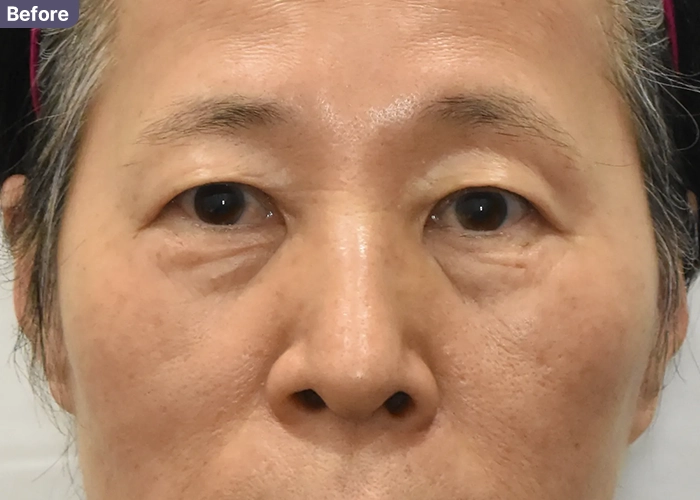
1. Seeing the Signs of Aging: Planning the Procedure
A lower blepharoplasty is not just about "removing fat." It is a complete structural redesign of the under-eye area. The procedure involves taking bulging orbital fat and shifting it downward to fill in hollow tear troughs, effectively resolving both puffiness and sunken shadows at the same time.
However, as we age, we naturally lose facial volume. For older patients, simple eyebags repositioning often isn't enough to achieve a smooth result, making it crucial to evaluate whether an additional autologous fat graft is necessary.
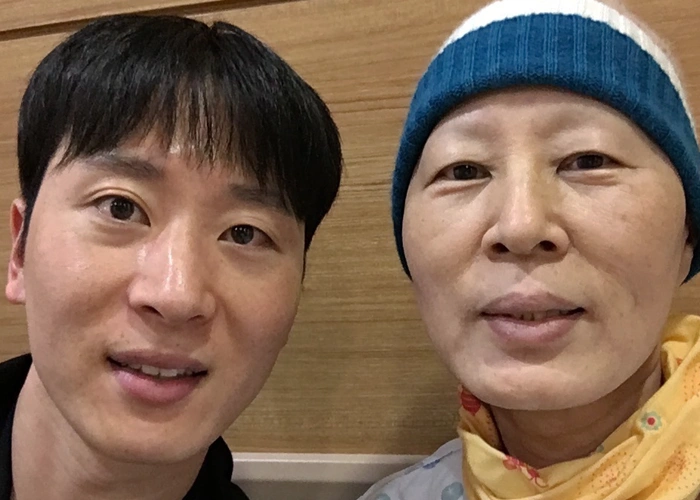
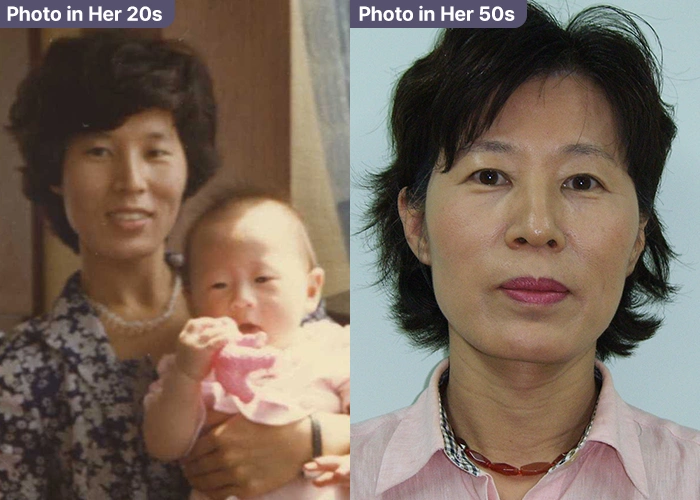
My mother was never someone who fussed over her appearance. But in her early 60s, after a grueling battle with breast cancer, the physical toll became highly visible. The exhaustion of her treatments, the emotional stress, and the natural passage of time seemed to settle on her face all at once. Her under-eye area, in particular, looked severely hollowed and tired.
Seeing this broke my heart, both as her son and as a plastic surgeon. I decided to step in and perform a family proven eyelid surgery to help her look as vibrant on the outside as she truly is on the inside.
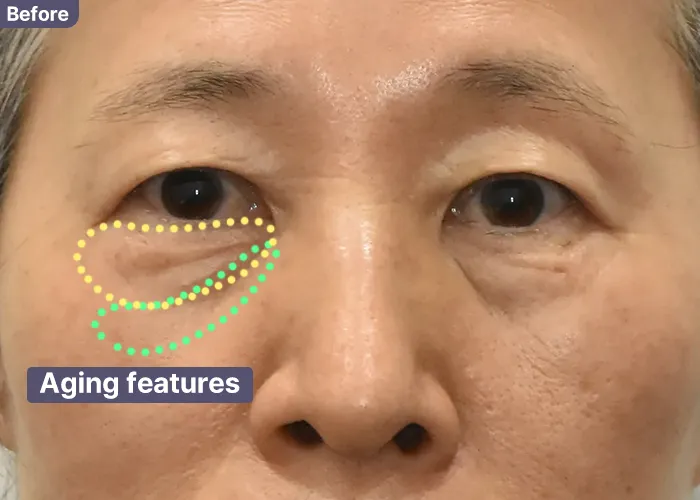
When I examined her eyes through a clinical lens, two main issues stood out:
- Severe Hollowing: Due to a natural lack of under-eye fat, age-related volume loss made her tear troughs appear incredibly deep and shadowed.
- Skin Laxity: She had an excess of loose, inelastic skin that had formed deep wrinkles. To fix this, surgical eyelid tightening (carefully excising the excess skin) was absolutely essential.
Why is Non-Incisional Approach Not Recommended in 60s?
Many middle-aged patients come into my clinic specifically asking for a simple eyebags surgery focused solely on fat repositioning without skin incision. While this technique works beautifully for patients in their 40s who have no skin sagging, it has major limitations for older demographics.
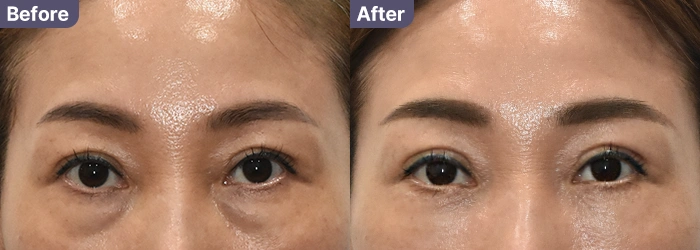
If you have loose skin, or simply do not have enough protruding fat to use as a natural "filler," repositioning the fat alone will not give you a smooth, refreshed result.
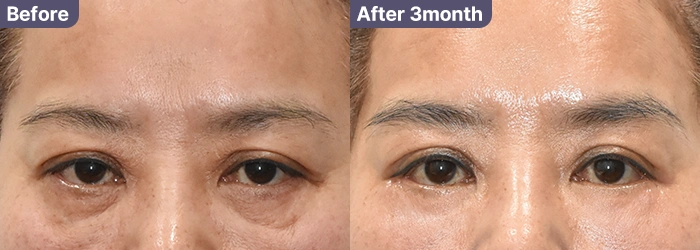
2. Why Was Lower Blepharoplasty Alone Insufficient?
There is a common misconception that a lower blepharoplasty just means taking fat out. In modern eyelid rejuvenation, the primary goal is repositioning—moving that unwanted bulge downward to fill in the hollows.
My mother, however, faced a specific hurdle: she did not have enough bulging fat to fill those deep under-eye valleys. If a surgeon attempts the procedure without enough native fat to work with, the hollows will remain visible after surgery. To solve this, we must introduce additional volume from elsewhere using a precision autologous fat graft.
When is Fat Grafting needed?
- Sufficient Orbital Fat + Mild Hollowing: Lower blepharoplasty alone is adequate.
- Insufficient Fat + Deep Tear Troughs: Lower blepharoplasty combined with Fat Grafting is strictly required.
- Superficial Dark Circles + Poor Skin Texture: Nano-fat grafting is highly recommended.
My mother clearly fell into the second category.
3. The Recovery Process: A Surgeon Son's Honest Experience
There is an unspoken rule in the medical field: treating family is always a heavy burden. I was certainly no exception to this rule.
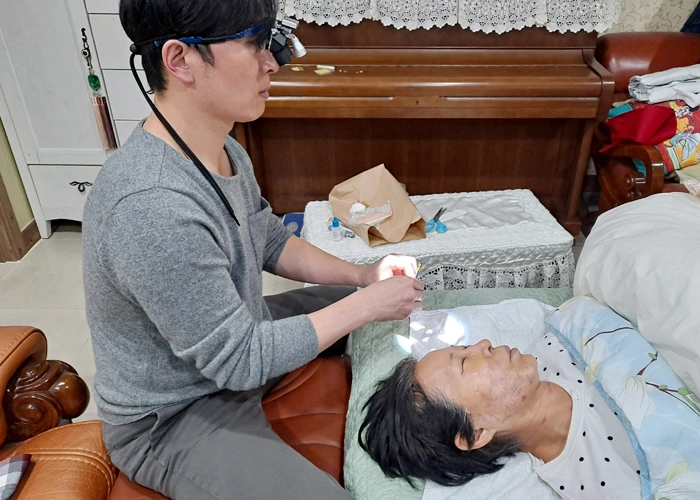
A few days after the procedure, I stopped by my mother’s house with my medical kit to clean her incisions. That is when I heard all the raw, unfiltered complaints that patients usually hold back when they are in the clinic: the pulling sensation, the tightness, the fear of looking "too puffy," and the general awkwardness of healing.
These physical sensations are entirely normal after a lower eyelid surgery, but for someone experiencing them for the first time, they can be unnerving. Because she's my mother, she didn't hold anything back! There was even a moment I asked myself if I had made a mistake talking her into this.
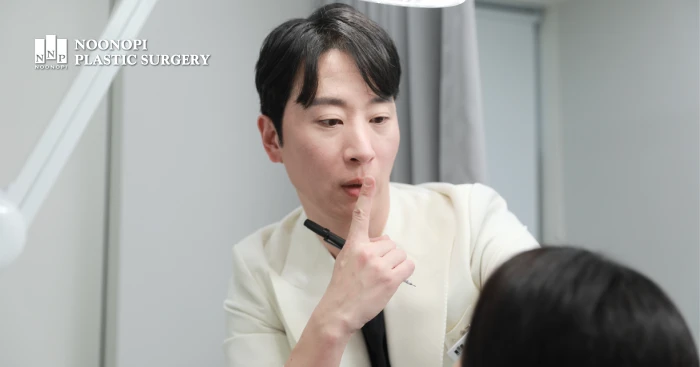
Looking back, that experience was invaluable. It gave me a profoundly empathetic perspective that allows me to provide much more transparent and comforting consultations to my patients today.
The Typical Recovery Timeline:
- Days 0–2: Swelling and bruising reach their peak. Consistent cold compresses and proper disinfection are vital.
- Days 3–7: Swelling begins to noticeably subside. Stitches are removed, and light makeup or gentle washing is gradually permitted.
- Weeks 2–4: The majority of the bruising fades, allowing you to comfortably return to your normal social life. (However, it is still too early to judge the final results).
- Months 4–6: All residual swelling completely dissipates, revealing the final, beautifully refined outcome.
4. The Results: 6 Years Later
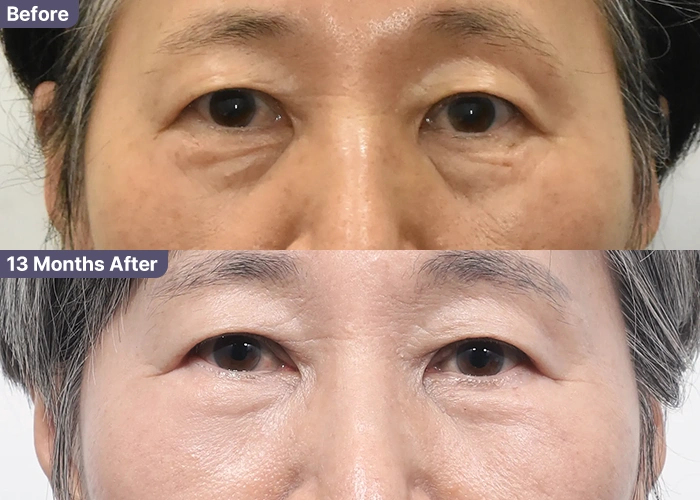
Fast forward 13 months, and my mother’s under-eye area was completely transformed. The heavy bulging was gone, and the deep hollows were smoothly filled. Today, six years later, she is still enjoying those beautiful, lasting results.
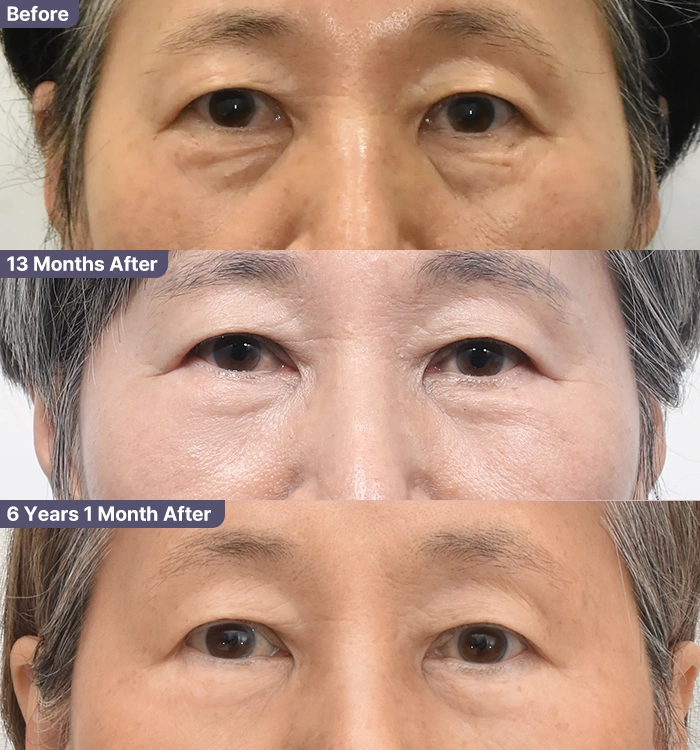
As an anti-aging specialist, I have a slightly paradoxical philosophy: the natural traces of time on a face are not inherently a bad thing. The goal of plastic surgery is not to aggressively erase every wrinkle until you look 20 again. It’s about lifting the heavy, accumulated exhaustion from your face so you look refreshed, natural, and perfectly in harmony with your age.
5. Frequently Asked Questions (FAQ)
Q. Is lower eyelid surgery safe for patients in their 60s?
Absolutely. However, it requires a much more meticulous evaluation of fat distribution, skin elasticity, and underlying health conditions compared to younger patients. A highly precise pre-operative diagnosis is critical to ensure safety and natural results.
Q. Do I always need a fat graft with a lower blepharoplasty?
Not always. If you have sufficient orbital fat and only mild hollowing, eyebags repositioning during the blepharoplasty is completely adequate. I determine exactly what you need during a direct physical evaluation.
Q. How long do the surgical results last?
Typically, the results of this surgery last around 10 years, though this naturally varies based on your individual aging speed, lifestyle, and overall health.
Q. What should I look for when choosing a clinic in Gangnam for this procedure?
You should ensure the clinic offers: 1) Extensive clinical experience specifically in middle-aged surgeries, 2) The technical capability to perform concurrent fat grafting if needed, and 3) A transparent system where the representative surgeon personally handles your consultation and surgery.
Q. What kind of anesthesia is used?
We typically use conscious sedation (often called twilight anesthesia). You can go home comfortably after resting in our recovery room for 1-2 hours. General anesthesia is almost never required for this procedure.
Q. Will I be left with severe scarring?
Because the incision for eyelid tightening is made meticulously right beneath the lower lash line, it blends beautifully into the natural creases of the eye. The scar usually becomes virtually invisible within about two months.
Epilogue
It has been years since my mother’s surgery. The sharp complaints she had during her recovery are now just a funny memory we share. Now, I find myself looking at her and wondering, "What can I do for her next?"
To find out whether you need a simple eyebags surgery or a comprehensive lift with fat grafting, contact Noonopi Clinic today. I will personally evaluate your unique under-eye structure and provide a customized, completely honest surgical plan.


