During consultations, I frequently meet patients who come in with their smartphones full of facelift before and after photos and every glowing facelift review they could find on plastic surgery apps. The unfortunate reality is that many of these patients have been blinded by clever viral marketing and heavily distorted photos, bringing highly unrealistic expectations into the clinic.
Since a facelift surgery is popular, having an eye for true surgical quality is far more important than just hunting for the lowest facelift cost in Korea. Today, to help you find a truly skilled plastic surgeon in Seoul, I am going to reveal 7 things you must know when reviewing facelift before after photos.
1. Are the Photo 'Conditions' Identical? (The Magic of Lighting, Angles, and Makeup)
This is the most basic trick, yet 9 out of 10 people easily fall for it. You must check if the facelift before after photos were taken under 100% identical conditions.
- Lighting and Brightness: Anyone who has taken professional photos knows how much lighting dictates an impression. If the "before" photo is taken under dull, harsh lighting, and the "after" photo is flooded with bright, flattering studio lights? It’s not the surgery making them look younger; it’s the lighting.
- Differences in Expression: If the patient is frowning in the "before" photo but smiling brightly with raised mouth corners in the "after" photo? The smile naturally lifts the cheeks and softens marionette lines, creating a distorted illusion of highly successful facelift results.
- The Trap of the "Selfie Angle": Tucking the chin slightly and shooting from a high angle magically slims down the lower face. Always check if the camera angle is strictly frontal and identical. For double chins, simply tilting the head back slightly can create a massive (and fake) difference.
- Bare Face vs. Full Makeup: The before photo features a bare face without even lotion, while the after photo showcases full glamorous makeup... This is incredibly common, right? It makes you wonder if you are judging surgical results or the doctor’s makeup skills.
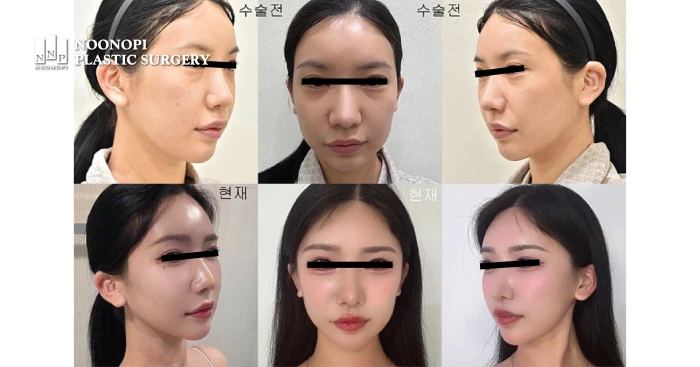
In truth, plastic surgery textbooks have entire chapters dedicated to clinical photography because objective comparison is so crucial. However, practically speaking, taking perfect comparative photos is incredibly difficult. I have been taking photos of my patients with my own hands for years, and even then, slight changes in expression or momentary flash brightness differences occur. Furthermore, it's very difficult to tell a patient who came in beautifully makeup for their follow-up to "go wash your face for the photo." Therefore, while it's hard for clinics to meet these conditions 100%, you must keep in mind that these are variables designed to dazzle your eyes.
2. Are 'Scars' Cleverly Hidden by Hair?
When browsing a facelift review, we often see photos where the patient’s hair is tightly pulled back with a headband in the "before" shot, but elegantly let down in the "after" shot. A hairstyle change alone creates a massive optical illusion that the result is much prettier.
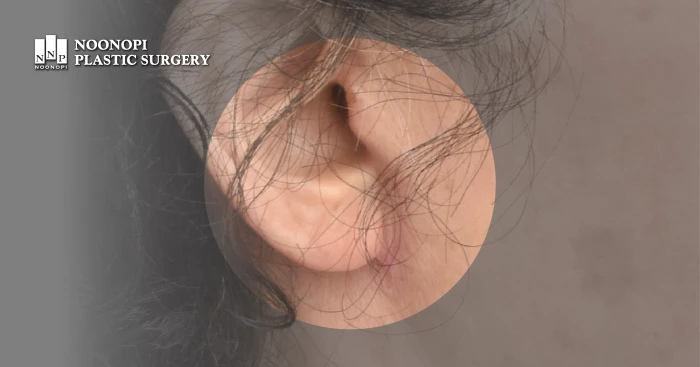
However, there is a more important point. It is the presence of scars or pixie ears, which can be used to gauge the skill of a surgeon. Due to the place of incision which involves around the ears, improper surgery can result in scarring or ear deformation. What if, in a post-operative photo, the area in front of or behind the ears is meticulously covered with hair? This could be an intentional attempt to hide parts that the surgeon did not want to be seen.
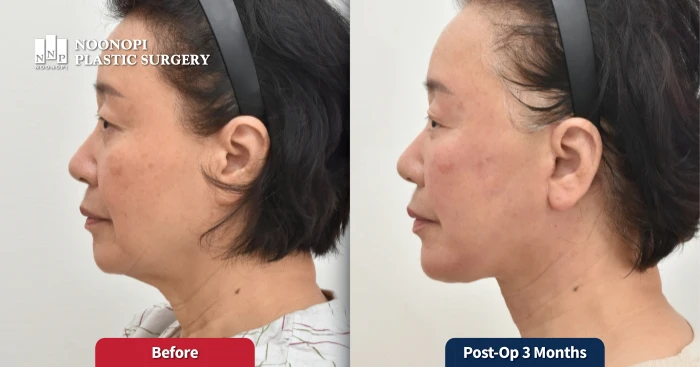
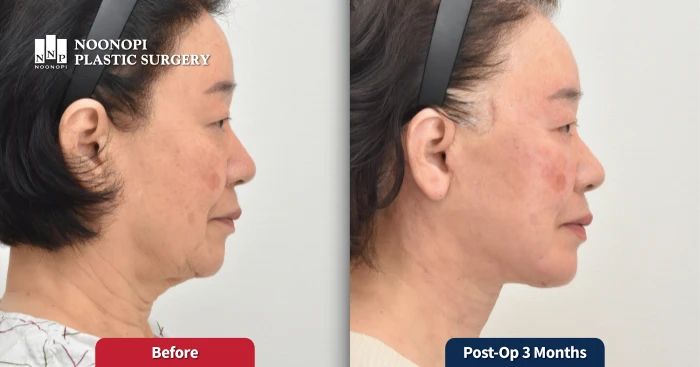
3. How Long Ago Was the Surgery?
"It's been 3 weeks since my surgery, and I have a perfect V-line!"
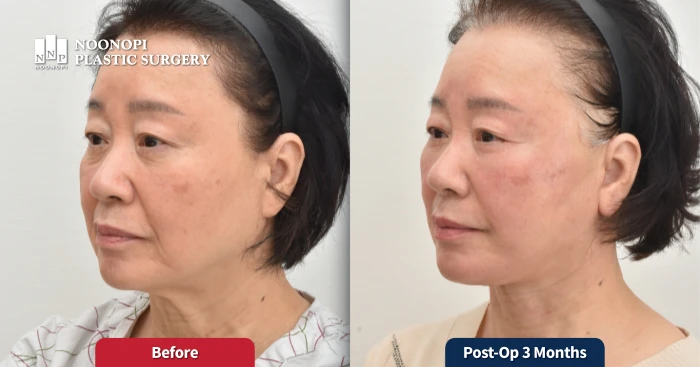
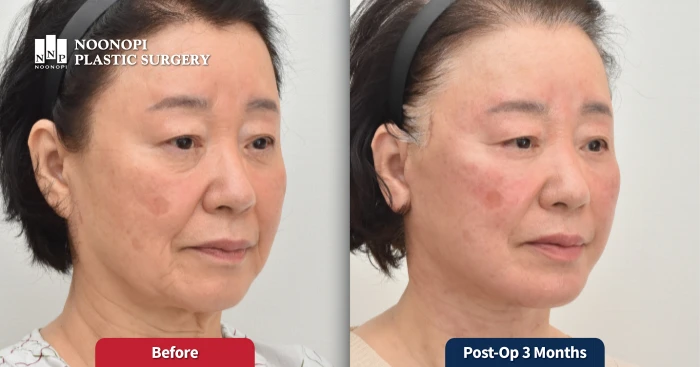
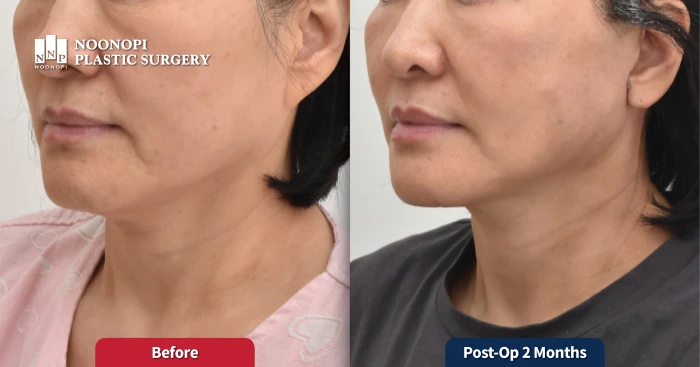
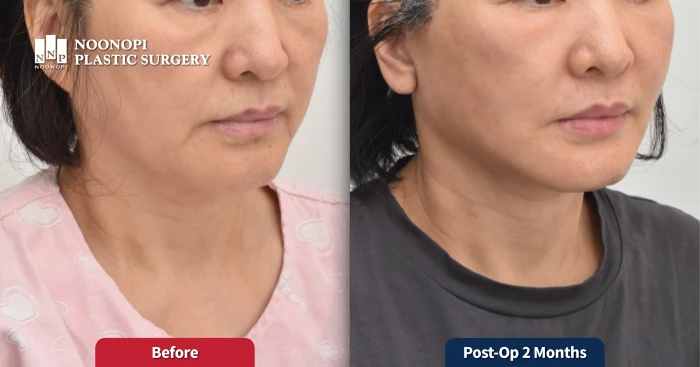
We can often see these facelift review on the internet. However in the early stages of recovery, there is 'swelling' inflating the tissues under the skin. This swelling acts like a temporary filler, plumping the face, smoothing out fine lines, and creating an illusion of extreme elasticity. To judge the true outcome of a facelift, one must look beyond initial recovery. Photos taken at least 6 months post-op offer more accurate view, as swelling has fully subsided and the tissues have settled.
Honestly speaking, it is very difficult for clinics to obtain genuine 1-year or 2-year post-op photos. Patients who are satisfied with their results and have recovered smoothly have no reason to take time out of their busy lives to revisit the clinic. Therefore, if a clinic transparently provides long-term data and long-term progress photos, you can trust them.
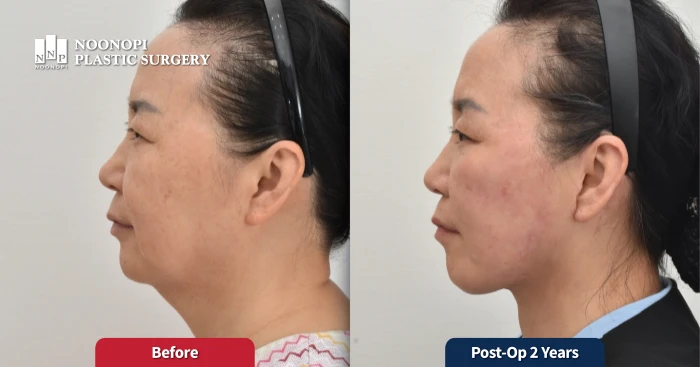
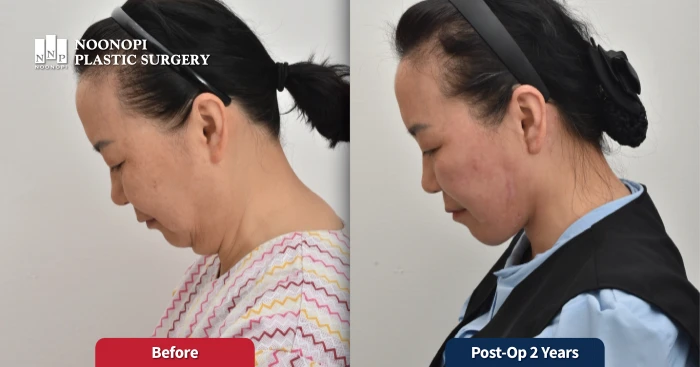
4. Are the Jowls and Marionette Lines Truly Improved?
One of big concerns for patients deciding on a facelift are the drooping jowls breaking the jawline and the stubborn marionette lines around the mouth.
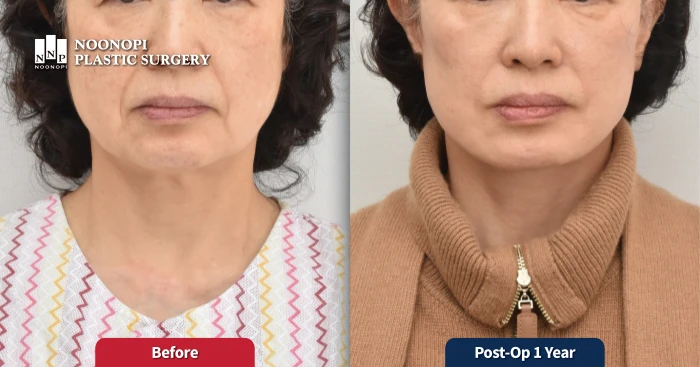
A "fake lift" that only pulls the outer skin will succumb to gravity within a month or two, causing the fat to sag again. You must check if the jawline—from the tip of the chin to below the ear—is smooth. This proves whether the surgeon properly performed a deep plane facelift by releasing and lifting the deep SMAS layer and thoroughly removing the deep buccal fat.
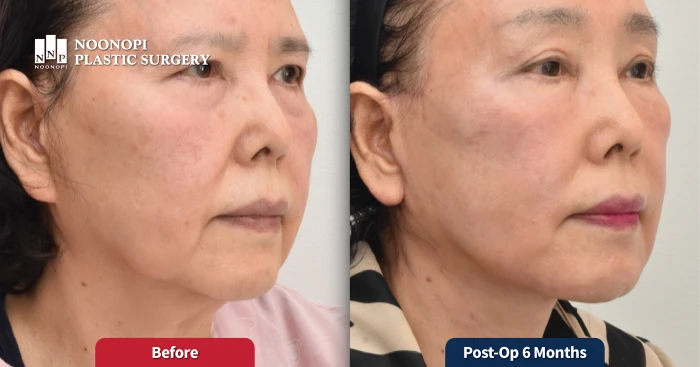
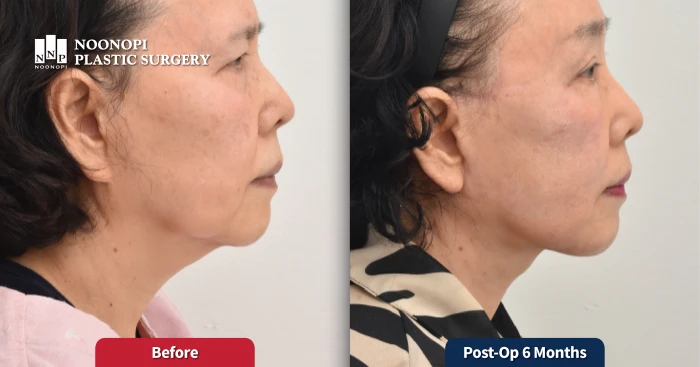
5. The Double Chin and Neck: The 'Looking Down' View Shows True Skill
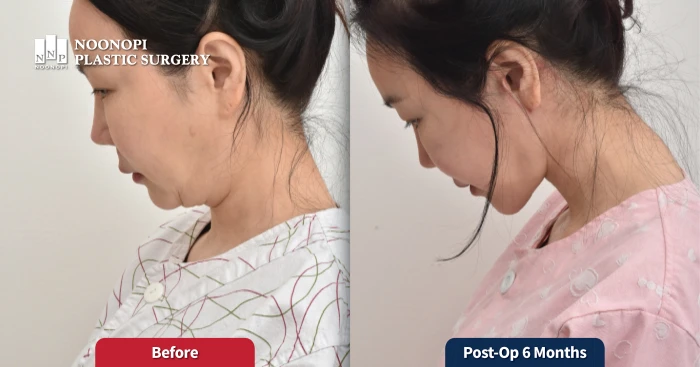
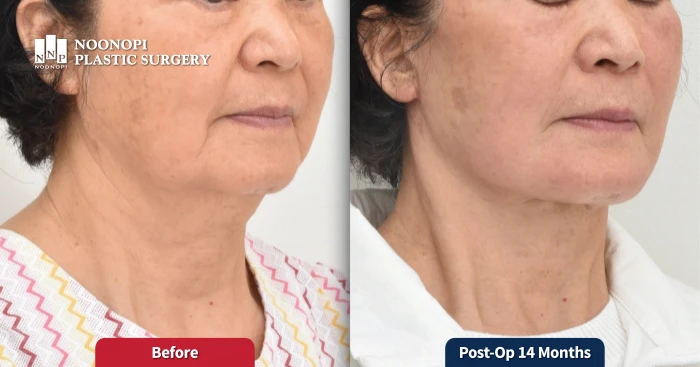
Doctors often say among themselves that the improvement of the neck is the key to judging the outcome of surgery. And to accurately assess whether the neck line and double chin have improved, you need to look at a 'photo of the head bowed.'
When performing a neck lift alongside a face lift, many clinics only make an incision under the chin and simply tie the muscles together, which is called platysmaplasty. Tying the muscle alone will create a tight neckline initially. However, if the heavy deep submental fat beneath the muscle isn't directly removed, the chin will drop back down before a year passes.
A genuine surgery that thoroughly removes the double-chin fat which is located under the platysma muscle will not show a double chin even when the head is tilted all the way down, making long-lasting results.
6. The Ultimate Facelifting Challenge: Addressing Nasolabial Folds
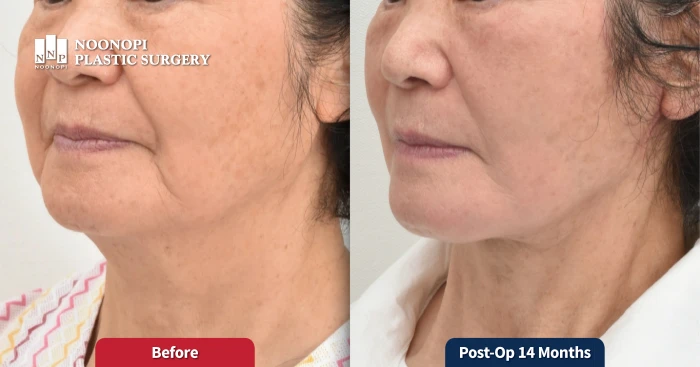
When patients ask me regarding a Facelift what to expect?, I always point out the midface. If you trace the history of the procedure, you'll find it was originally developed to smooth out nasolabial folds. Paradoxically, however, the smile lines and midface are the hardest areas to achieve dramatic changes in, even more so than the jawline or mouth corners.
Because the procedure fundamentally pulls SMAS and skin laterally and backward, there is a structural limit to flattening the deep valleys of nasolabial folds. Depending on the patient's facial structure (such as prominent cheekbones), this limit becomes even clearer. This anatomical limitation is exactly why Noonopi Plastic Surery combines Fat Graft and Skin Laser Resurfacing during facelifting procedure.
7. How Natural are the Scars, Hairline, and Ear Shape?
Finally, these are the three elements that determine the surgical detail and perfection. No matter how sharp your V-line becomes, I believe "Operated-look" is a failed facelift.
1) Incision Scars
During the recovery period, it typically takes 4 to 6 months for the redness to fade and the scar to become less noticeable. Do not rush to judge based on 1-month post-op photos.
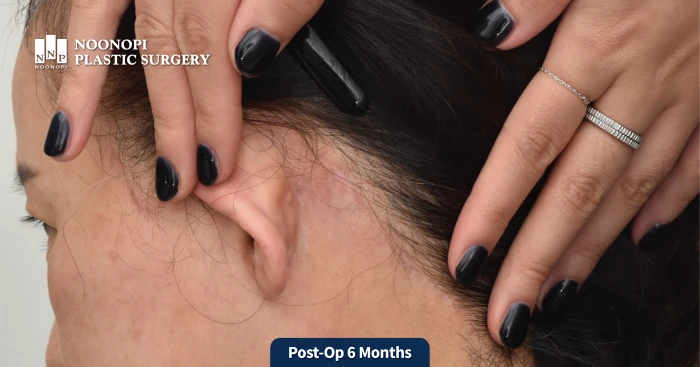
Click to read more about location of well-performed facelift incision.
2) Hairline Preservation
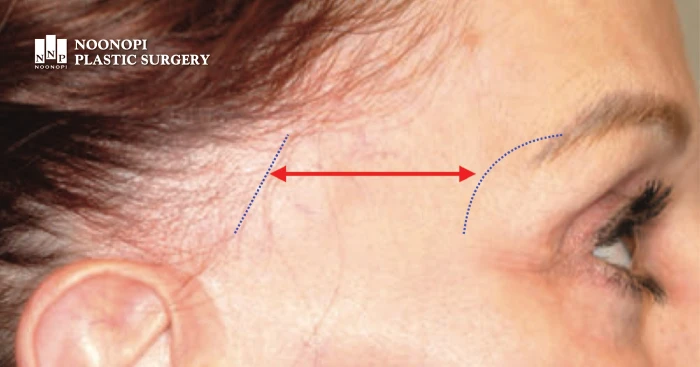
Incorrect incision placement or excessive skin excision will drag the sideburns upward, making them extremely short or eliminating them altogether. Also, check if the hair at the temples has been lost, making the forehead look awkwardly wide.
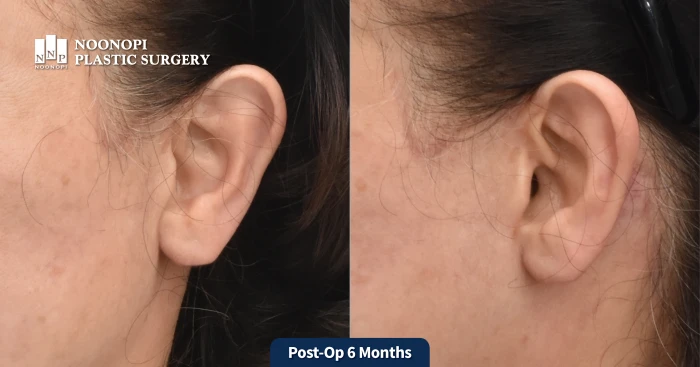
3) Ear Shape (Beware of the Pixie Ear!)
If the skin tension is not properly managed, the round earlobe will be dragged down into a pointy 'Pixie ear'.
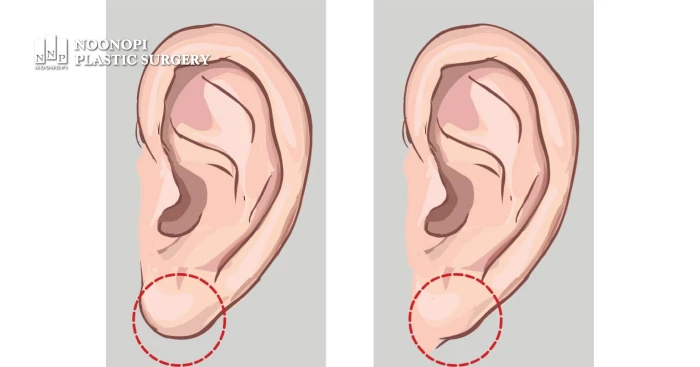
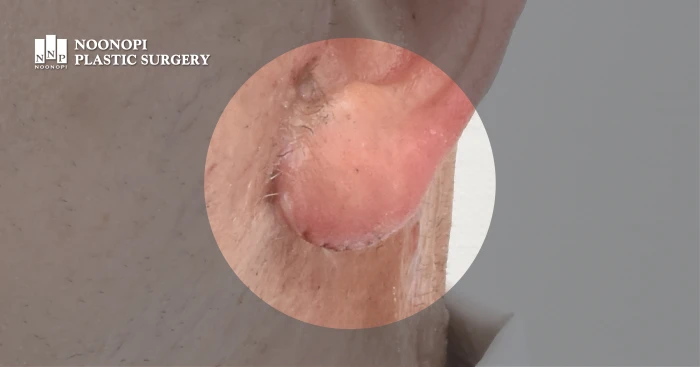
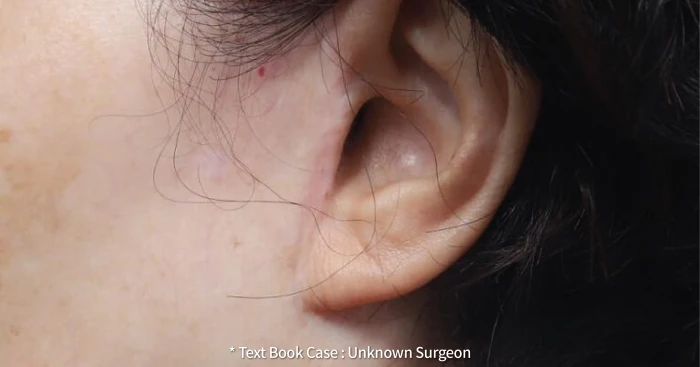
Also, you must zoom in to check if the surgeon, while trying to hide the scar, flattened or cut away the natural curve of the tragus (the cartilage in front of the ear), resulting in a 'Chopped-off tragus'.
For Asian Facelift, What To Expect
During consultations, I meet many patients who dream magical fantasies about their facelift results. However, every surgery has clear limitations, and even if the same master surgeon operates, the results will vary from individual.
To give you the honest facts: smaller cheekbones make a facelift much easier. Because Asian patients typically have stronger cheekbones than Caucasian patients, the skin has to stretch over a larger bone. This makes an Asian facelift more difficult to achieve the same dramatic look.
I hope this guide helps you find the best clinic in Seoul. Don't be fooled by flashy marketing. Look at the real results, and choose true quality over a cheap facelift cost.