In aesthetic surgery, mens facelifts present a distinct set of challenges compared to those for women.
However, among men, bald patients present a truly unique and daunting challenge.
Why?
Because traditionally, plastic surgeons rely heavily on the hairline to hide surgical scars. When there is no hair to act as a "curtain," the scars are completely visible.
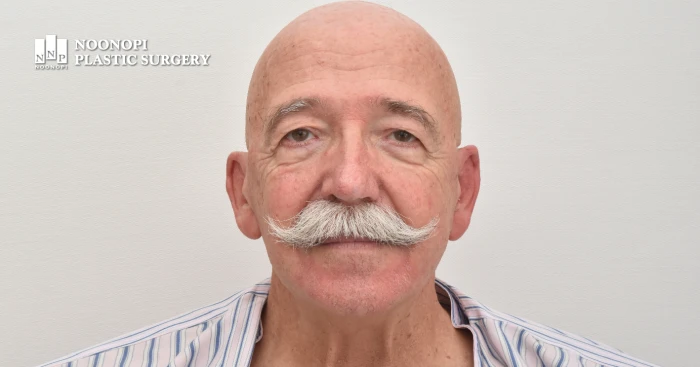
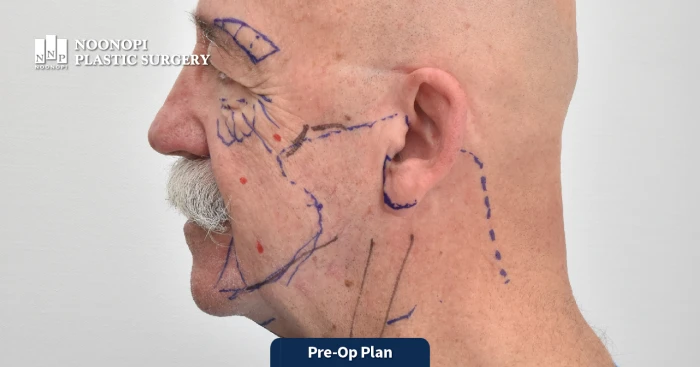
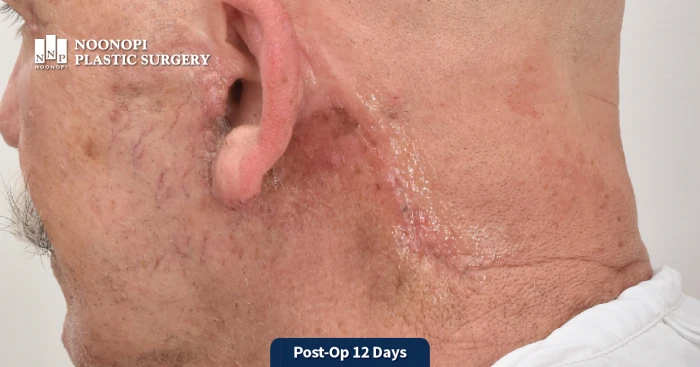
Today, I want to share the surgical journey of a 70-year-old bald male patient who visited Korean Plastic Surgery clinic. Through his case, let’s uncover three important facts about face lifting for men without hair and how we achieve natural, nearly invisible results.
Tip 1: A Shorter Incision Isn't Always Less Visible
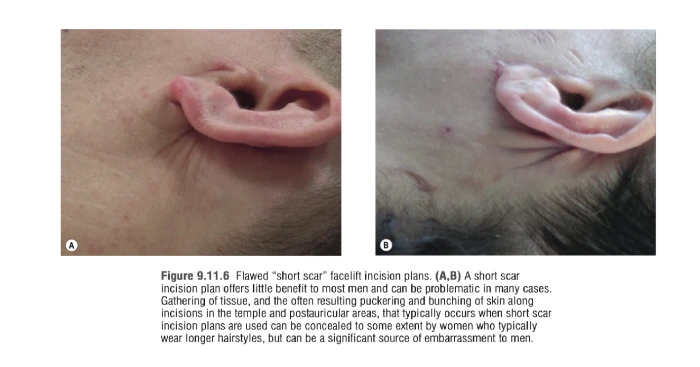
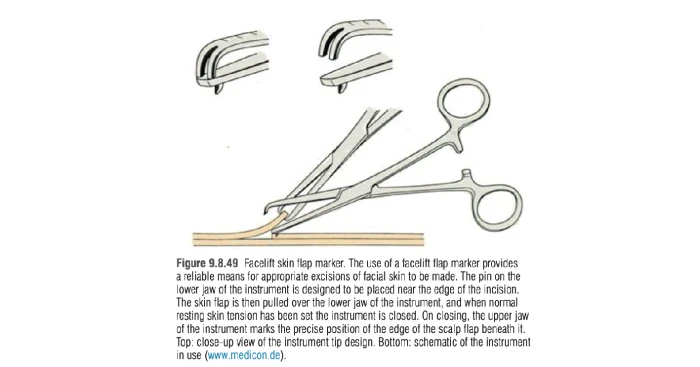
When patients worry about scars, they usually ask for the shortest incision possible. However, in reality, attempts to minimize the incision length in facelift surgery often lead to tissue bunching (skin rolls) when the sagging skin is lifted.
Dr. Botti introduced a paper on facelift techniques for bald male patients. However, as Dr. Eric Swanson noted in his critique of that paper.
Short incisions inevitably result in "skin rolls." Unlike a full-incision facelift, the skin edge cannot be gathered incrementally because the incision is too short in limited-incision techniques, such as Ponytail Lift or Vertical Restore Facelift . These bunched-up tissues take a long time to settle down, and for bald men—who cannot hide behind hair—this can lead to severe contour deformities.
Therefore, we must respect the unique topography of a balding patient’s scalp.
Why a "Ponytail Lift" or "Vertical Restore Facelift" is Not the Answer for Mens Facelifts
For the reasons explained above, short-incision facelifts should be avoided. Facial aging doesn't just happen in one isolated spot; the entire face ages and sags as a single unit. Despite this, trendy marketing terms like the Ponytail Lift, Mini facelift, or Vertical Restore Facelift continue to mislead patients.
Are they good surgeries? Well... perhaps for a very specific, younger patients.
Are they good for bald men? Absolutely not.
These techniques rely heavily on pulling tissues vertically and attempting to "hide" incisions in areas that simply aren't hidden on a bald head. I recently had an experience that solidified this belief.
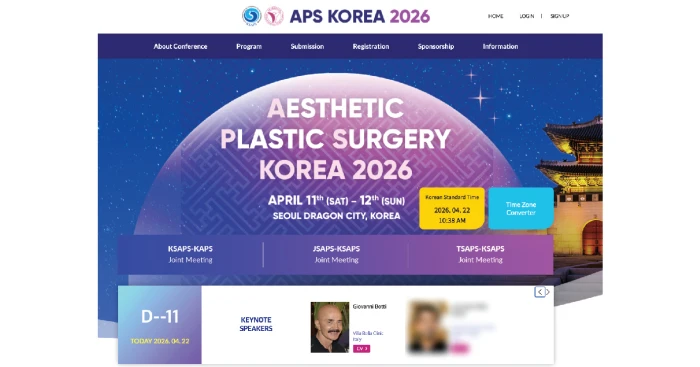
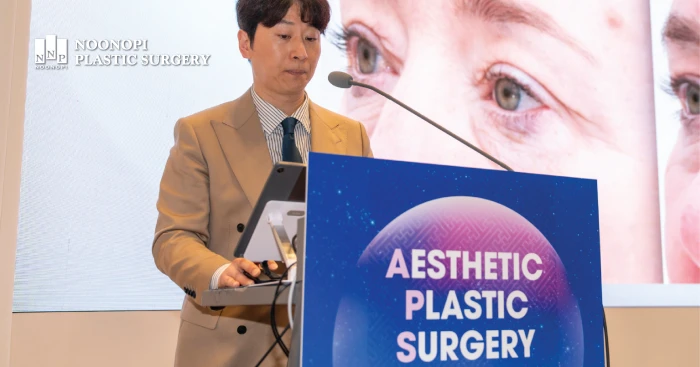
At the Aesthetic Plastic Surgery Korea 2026 meeting, the renowned Italian surgeon Dr. Giovanni Botti attended and mentioned that he had undergone a facelift himself using his own method. Walking behind him by chance, I observed unnatural skin vector and some bunching skin tissue behind his ears.
보티 사진 alt tag : If the incision area is made inappropriately short, tissue clumping may occur.
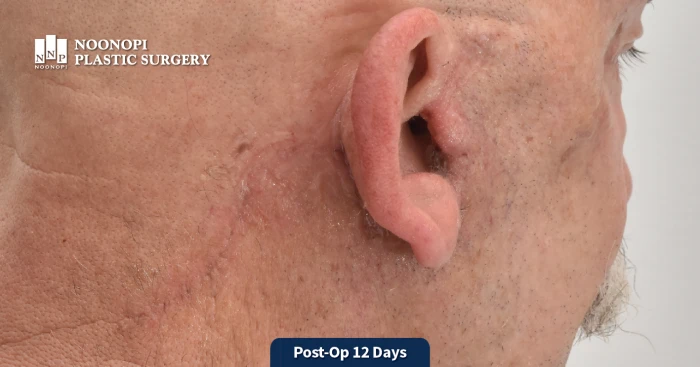
Alt-tag: Observation of a vertical facelift incision in a bald male patient.
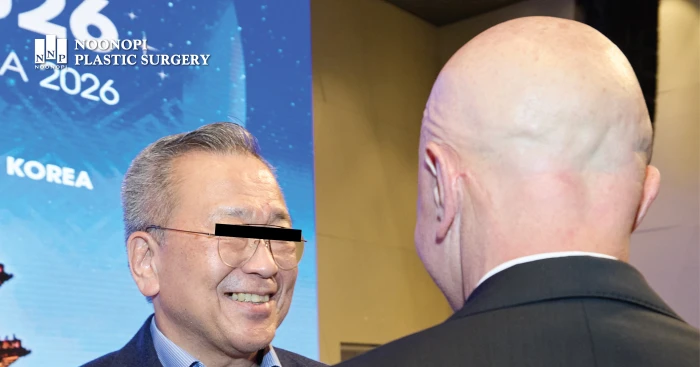
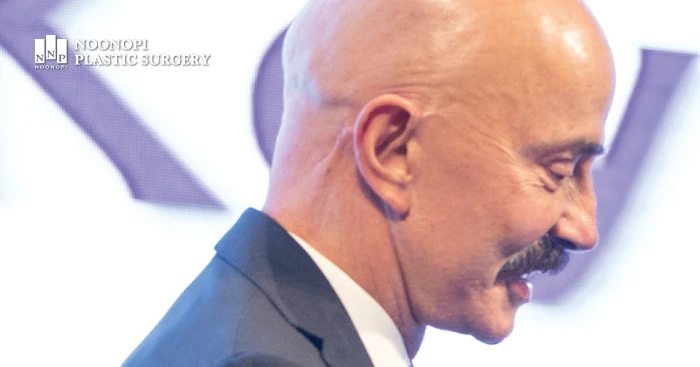
Of course, it was not a serious side effect as described in above textbooks, but the traces of surgery were very clearly visible to me from a distance. And this was not a hypertrophic scar, but tissue clumping caused by an inappropriate skin vector (pulling direction) resulting from the short incision.
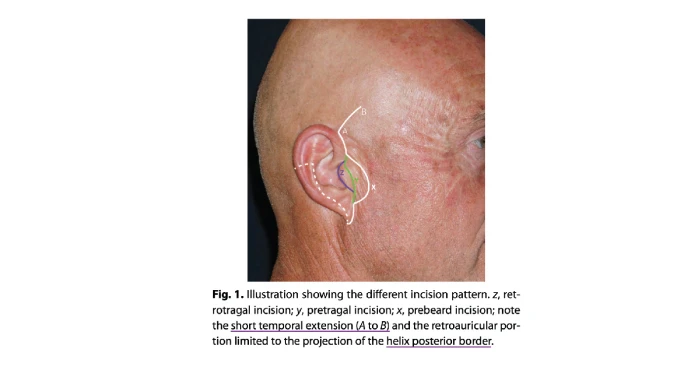
If you have a receding hairline or are bald, I advise against a mini facelift. The incisions will leave noticeable telltale signs that compromise the natural-looking result you desire.
The Alternative? There Are No Shortcuts.
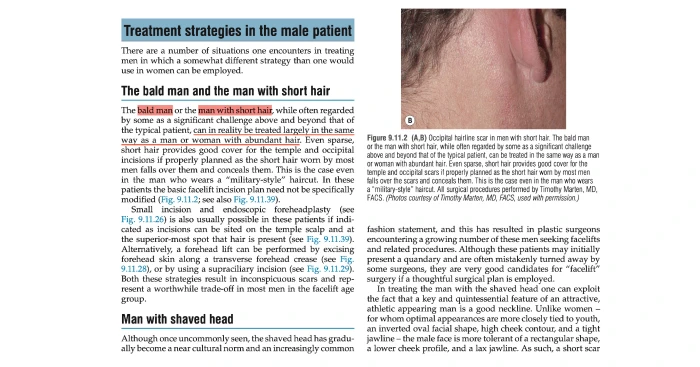
In high-end surgery, there are no shortcuts. The incision for a bald patient should be designed similarly to that of a patient with hair.
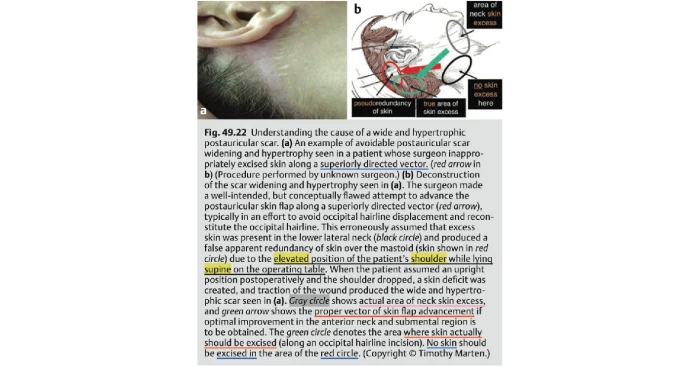
Specifically, to treat true skin excess (rather than just "pseudoredundancy") in the neck area, the post-auricular incision must be extended.
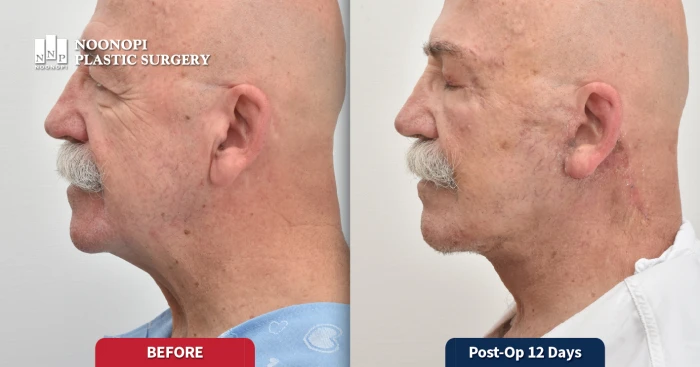
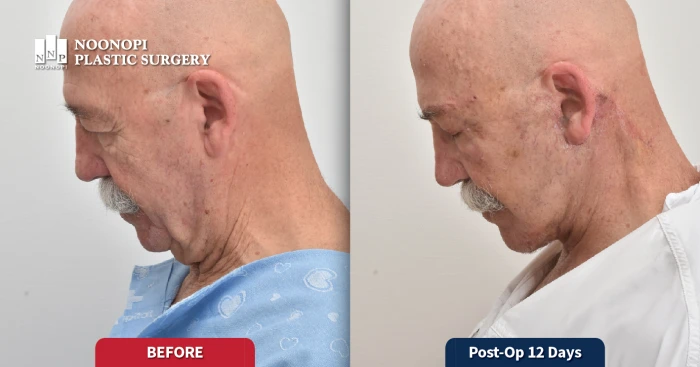
Tip 2: "Hair Shift" is Inevitable in face lifting for men (But We Can Fix It)
When we lift and pull the skin back during a facelift, the hair-bearing skin (like the beard area on the cheeks or neck) inevitably shifts backward. For bald men, beard hair might suddenly end up behind the earlobe! This is an unavoidable trade-off, especially in men's facelifts. However, Noonopi provides two effective solutions to manage this:
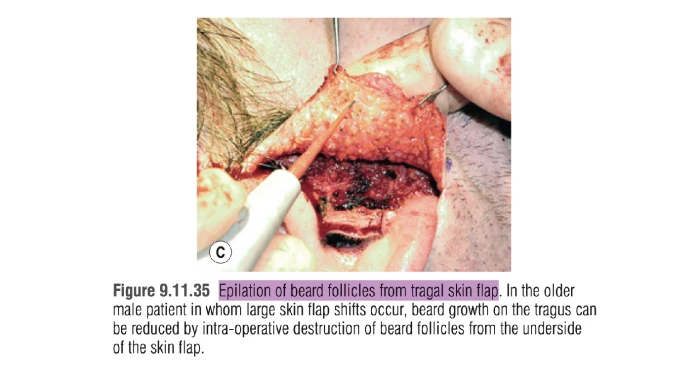
Intra-op Hair Follicle Removal (Bovie Cauterization)
During surgery, while the skin flap is lifted, I can see the roots of the hair follicles on the underside of the skin. I use a surgical cautery tool to meticulously destroy these hair roots from the inside out before suturing.
While this technique may look simple, it requires a high degree of focus and skill. If done incorrectly, it can lead to skin burns.
Post-op Hair Removal Laser in Korean Plastic Surgery
Since follicle extraction during surgery may not be 100% perfect, we follow up with a hair removal laser at Noonopi Plastic Surgery once the wounds have fully healed.
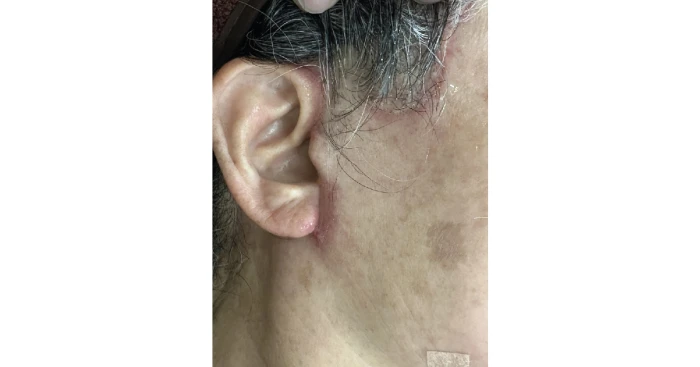
Tip 3: "Tension-Free" Skin Closure is the Ultimate Secret
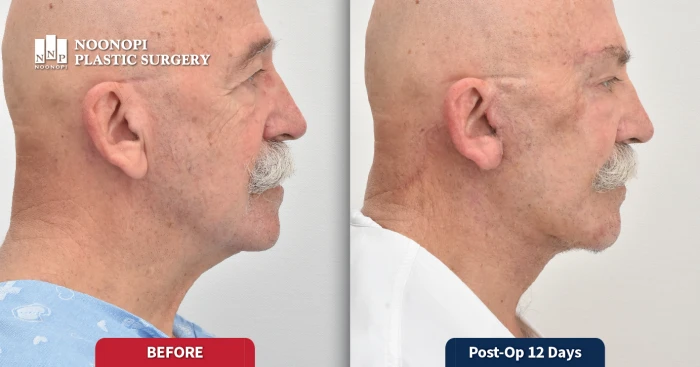
In successful facelift photos of bald men, the scar should be nearly impossible to spot. How is this possible without hair to hide it?
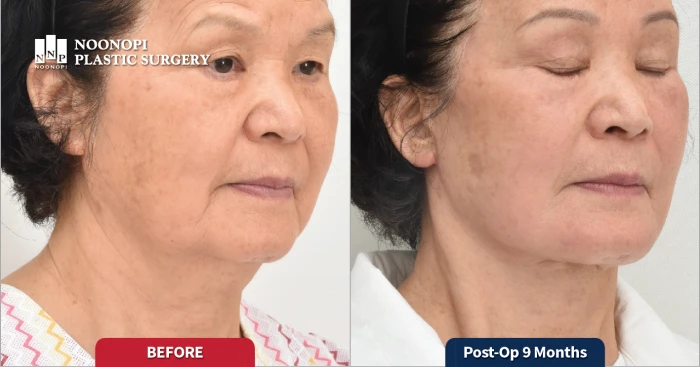
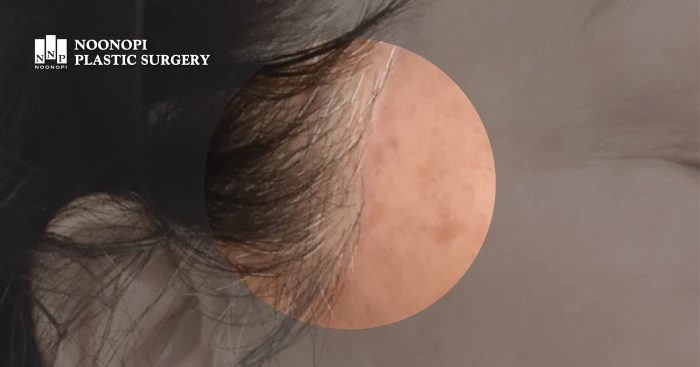
The secret is Tension-Free Skin Closure. In a proper Deep Plane Facelift, 100% of the lifting is done on the deep muscle layer (SMAS). The skin is simply redraped gently and trimmed. Because there is zero tension on the skin edges when suturing, the scar heals as a paper-thin, nearly invisible line rather than a stretched, widened mark.
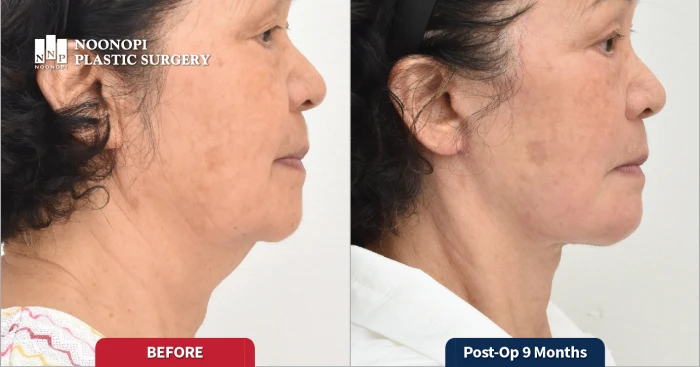
4 Signature Details Beyond Imitation
A great facelift isn't just about pulling skin; it’s about the tiny details that reveal your age. We would like to introduce the signature features of the Noonopi Deep Plane Facelift—details that are truly beyond imitation.
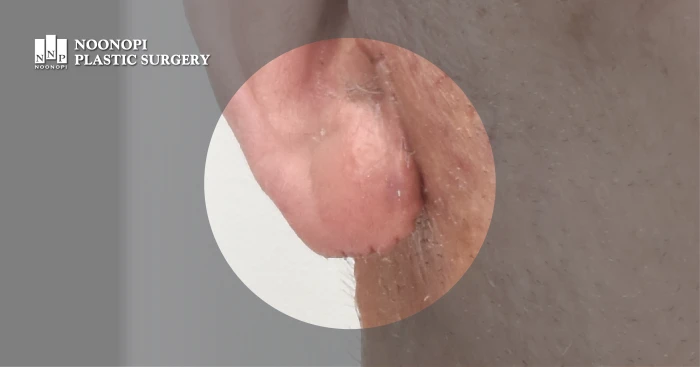
1. We Perfected The Earlobe
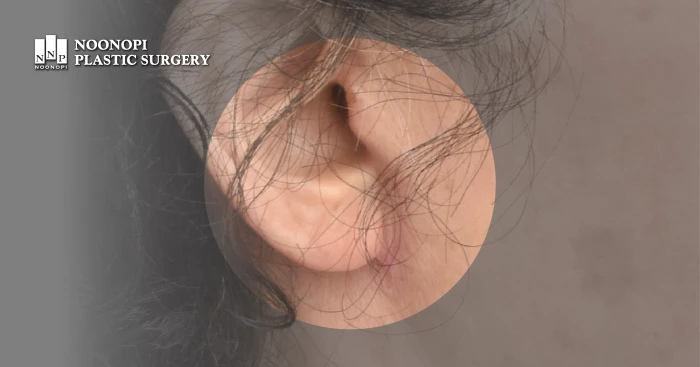
As we age, their earlobes often get longer, thinner, and saggy—what we call the "Grandfather’s Earlobe."
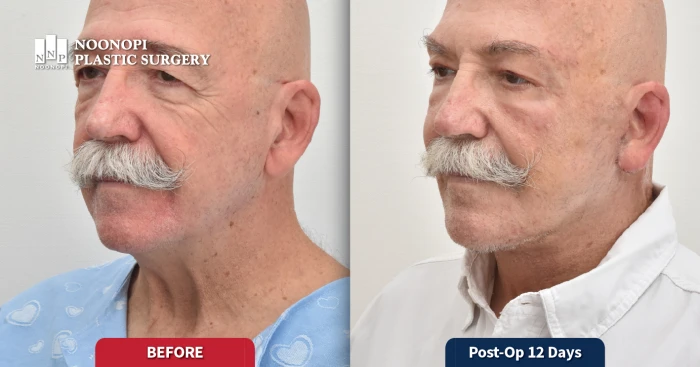
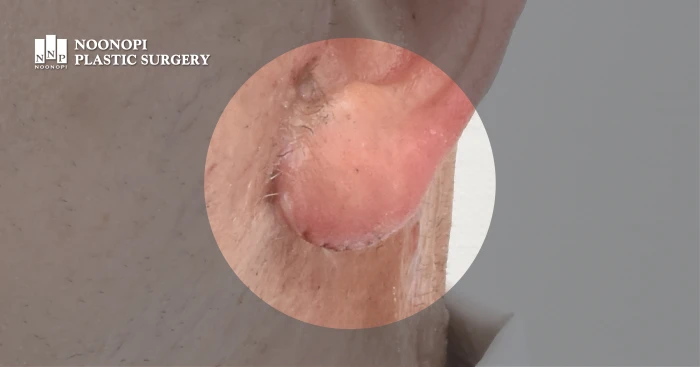
You can have a razor-sharp jawline, but elongated, wrinkled earlobes will instantly betray your age. During the facelift, Dr. Park reshape and shorten the earlobes, restoring a plump, youthful contour.
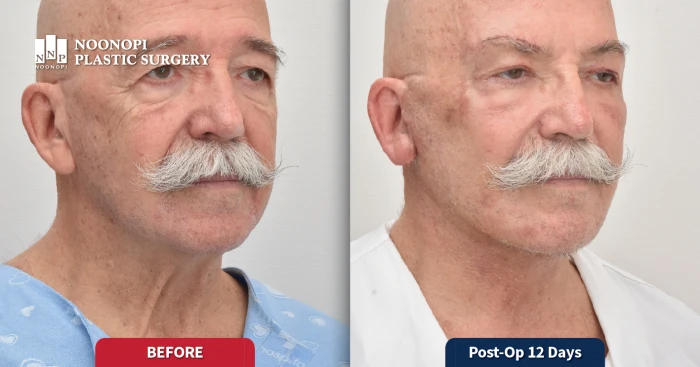
2. Discreet scars, preserved tragal contours
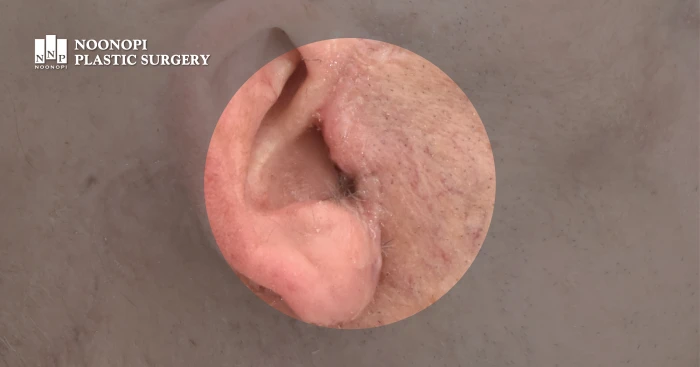
Many surgeons prefer a pretragal (in front of ear cartilage) incision to utilize the natural crease in front of the ear. However, this creates a continuous linear scar that the human eye can easily "trace."
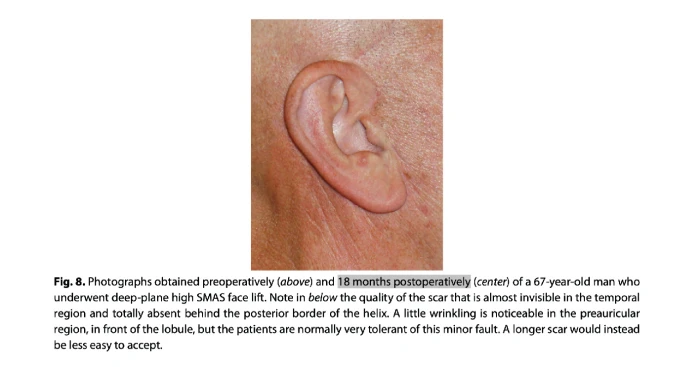
By utilizing a retrotragal incision, we disrupt the continuity of the scar, ensuring it remains hidden and impossible to trace.
3. Proficiency in Various Eyelid Surgery
Our 70-year-old patient also required upper eyelid rejuvenation. Many single-surgeon clinics only offer a limited range of procedures. We often see cases where a surgeon performs a great facelift but fails to deliver a good result on the eyelids.
Conversely, in "factory-like" clinics, multiple doctors might work on one patient, but this leads to conflicting aesthetic standards and a stressful experience for the patient.
At Noonopi Plastic Surgery, we manage everything from skin procedures to comprehensive surgical facial rejuvenation under a single, unified aesthetic vision.
While many Korean clinics default to an endoscopic brow lift or a standard upper blepharoplasty, these may not be ideal for Caucasian patients. I explained three distinct options to him:
- Endoscopic Brow Lift
- Suprabrow Lift or Direct brow lift (Incision above the eyebrow)
- Subbrow Lift (Incision below the eyebrow)
The patient chose the Suprabrow Lift, which was perfectly suited for his brow position, crow’s feet, and hooded eyes.
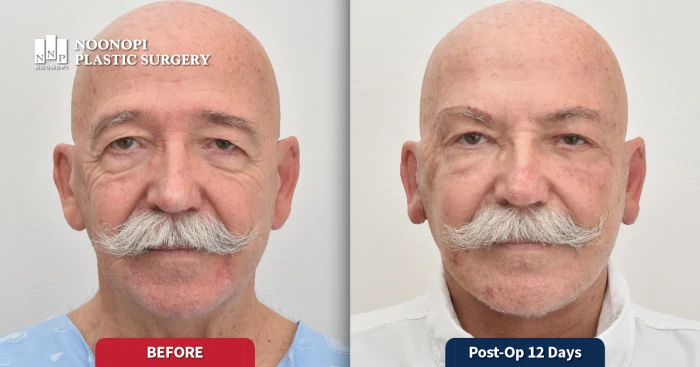
If a doctor only recommends one surgery, it might be because they only know how to perform that one. We guarantee your right to choose based on our extensive experience and published research.
(Dr. Park's article: An Algorithmic Approach for Upper Eyelid Rejuvenation)
4. One More Things!
There are 3 categories of facial aging.
- Skin surface aging: e.g. Loss of skin collagen, fine wrinkles
- Tissue sagging: e.g. Jowls
- Volume deflation: e.g. Lower lid hollowness
Surgery that only treats sagging by facelift may leave something to be desired. At Noonopi, in addition to a rhytidectomy, various combination treatments for anti-aging are available in a one-stop service.
💡 Conclusion: Your Face Deserves a Master Plan
Bald men require a highly tailored, algorithmic approach to facial rejuvenation. From calculating the trajectory of an exposed scar to managing beard shifts and reshaping earlobes, there is zero room for error.
If you are considering a facelift and wondering how your lack of a hairline will affect the outcome, don't guess. Contact Noonopi Plastic Surgery, and let’s design a customized master plan for your youth.
Consult with Dr. Park for your customized facelift plan